Microfibre is not a material. It is a specification nobody writes down.
Custom Microfiber Cloths makes lens and screen cloths, sublimated cloths, detailing towels, waffle-weave glass cloths, pouch sets and polishing cloths — quoted by split fibre, blend ratio, GSM and edge finish.
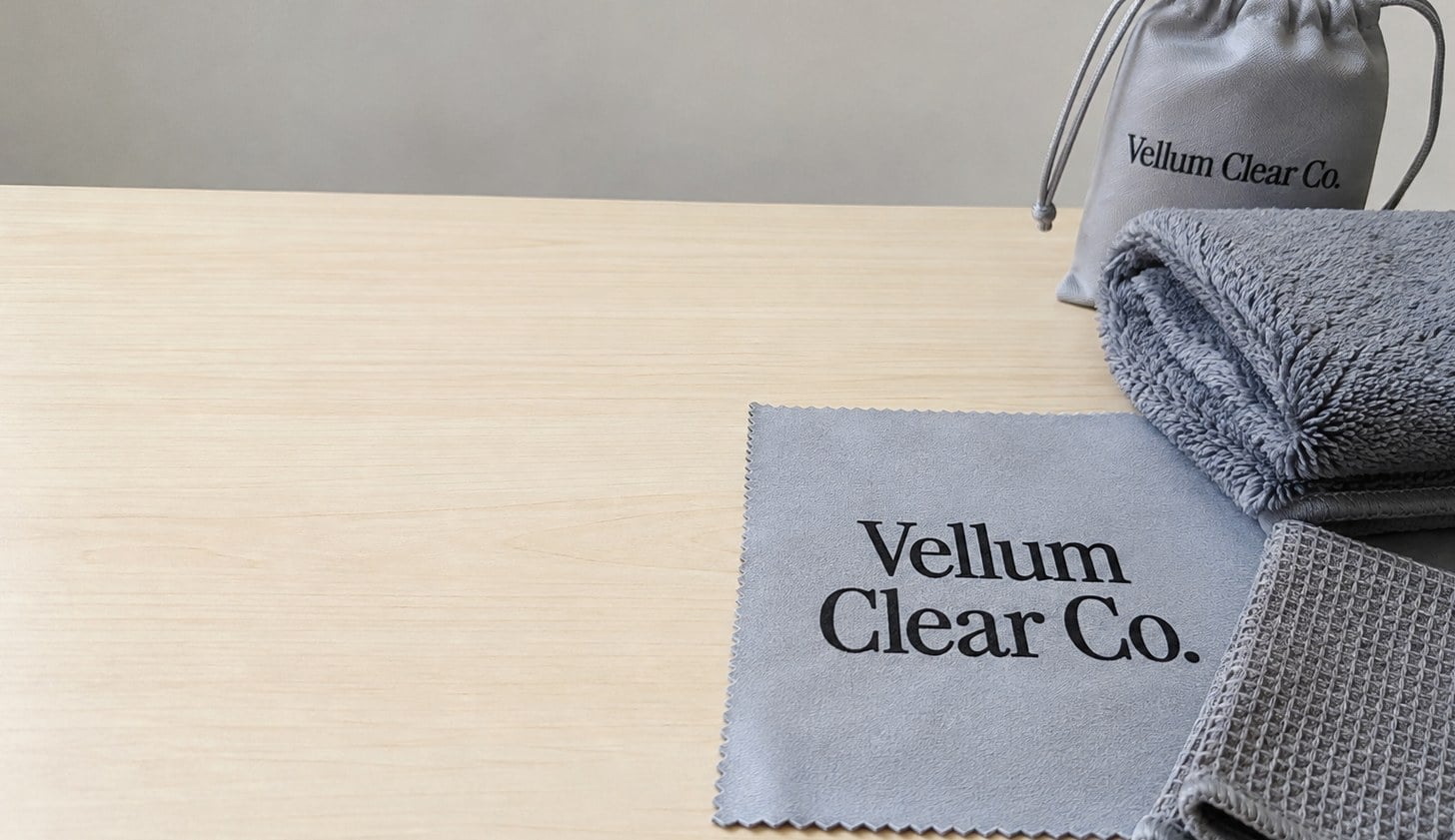
Two cloths arrive. They are the same colour, the same size and the same price. One lifts the oil off a lens in a single pass. The other pushes it around and leaves a haze.
Nothing on either label explains the difference, because the word microfibre covers both. One is split filament and one is not, and only one of them cleans.
So the cloths get blamed, then the cleaning spray gets blamed, then somebody buys a different brand and the cycle starts again. All of it comes from a specification that was never asked for.
Why we exist
A microfibre cloth is decided by four things: whether the filament is split, the polyester to polyamide ratio, the weight in GSM, and how the edge is finished. None of the four appears on a normal quote.
All four appear on ours, and there is a two-second test for the most important one.
Split fibre cleans. Unsplit fibre smears.
During manufacture each filament is split into dozens of finer wedge-shaped strands. The edges of those wedges scrape residue off the surface, and the capillary space between them holds what has been lifted.
An unsplit filament is simply very fine polyester. It is soft, it photographs identically and it pushes soil around. Drag a dry cloth slowly across a dry palm: split fibre grabs and drags, unsplit slides. Do it in the shop, before you buy.
The ratio is a cleaning spec and a printing constraint at once
Polyester gives strength and the scrubbing edge; polyamide gives absorbency and grab. An 80/20 is the general standard, a 70/30 is plusher and holds more, and a high-polyester face is cheaper and less absorbent.
Here is the part nobody mentions: dye sublimation bonds only to polyester. So the polyamide that makes a cloth feel better also makes the same artwork read softer on it. It is a genuine trade-off, and we put it in front of you rather than choosing silently.
The edge is what touches a lens
A serged edge drags a polyester thread that is harder than the fibre around it. On a coated lens or on clear coat, that thread is the thing leaving marks.
A laser-cut or ultrasonically welded edge has no thread at all, cannot fray and sheds nothing. We keep serged edges for wheels, engine bays and general cleaning, where nothing delicate is involved.
Fabric softener is what actually kills them
Almost every cloth returned to us as worn out has been washed with softener or dried with dryer sheets. Both leave a coating that fills the space between the split fibres.
The cloth looks perfect and stops working. Wash warm with detergent only, separately from cotton, and air dry or tumble low — we print that on the packaging because it doubles the working life for free.
What we will talk you out of
A serged edge on anything that will touch a lens. A single untreated cloth sold as a polishing cloth. A plush pile towel for glass. A heavy solid print where lint will show.
And any antimicrobial or disinfectant wording. Microfibre removes soil mechanically, which is genuinely valuable and is why healthcare cleaning uses it. It kills nothing, and we will not print a claim that says otherwise.
How we work
ASK
What surface it cleans, how often, and how it gets laundered.
SPEC
Split fibre, blend ratio, GSM, weave and edge finish.
TRADE
Print punch against cleaning feel, stated before you choose.
MOCK
Free mockup within 24 hours, proofed edge to edge.
SHIP
About 2 weeks, with the real date confirmed in writing before you commit.
Who we serve
Get in touch
Text or call George at (929) 605-4397, or email info@custommicrofibercloths.com. Free mockups, low minimums, and a lowest-price guarantee.
Win Free Stuff
Enter below for a chance to win plus receive 10% off your first order.
🎉 You are in!
We will text you your 10% off code. Good luck!