The most common mistake in ordering microfiber is treating every cloth as interchangeable. A cloth that cleans a phone screen without a streak is the wrong tool for drying a car, and a plush towel built to hold water will smear a camera lens. Weight and weave are what separate them, and both track closely to the job. This is a use-case guide: pick the surface you actually need to clean, and let that decide the fabric weight, the weave, and the size before you think about branding. Get those three right and a cloth cleans better and lasts longer; get them wrong and no amount of quality in the fiber will save the result.
Lens and screen: the lightest, tightest cloth
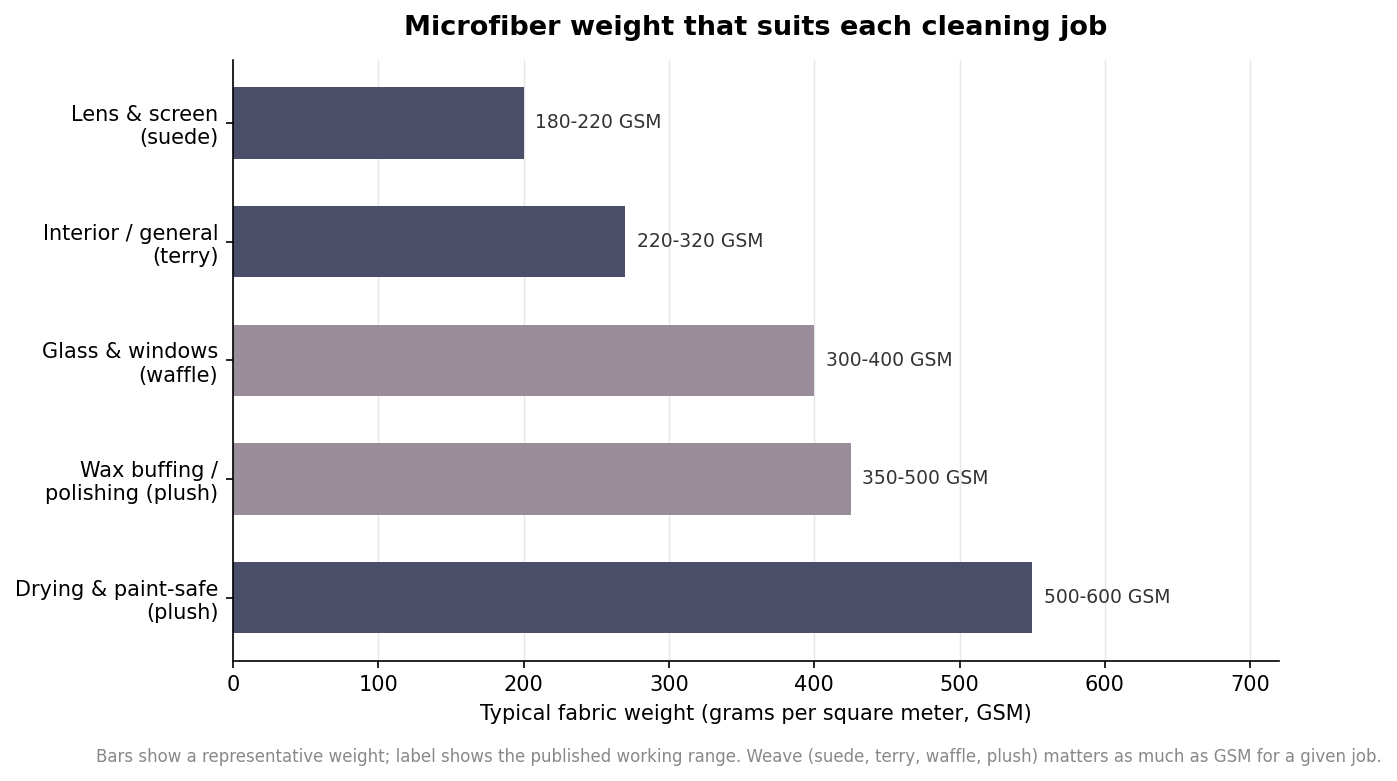
Eyeglasses, camera lenses, and phone or tablet screens need the gentlest cloth in the catalog. The right choice is a suede-finish microfiber around 180 to 220 GSM, woven flat and tight rather than fluffy. The tight face lifts oil and fingerprints without dragging grit across a coated surface, which is exactly what a plush towel would do. These cloths are small by design, commonly 6 by 6 or 8 by 8 inches, because the job is precision wiping, not covering area. This is also the workhorse of promotional microfiber: a printed suede lens cloth is cheap, useful, and lives in a glasses case or laptop bag for years, so the branding gets seen far longer than most giveaways. If you are ordering cloths to hand out, this is almost always the format you want.
Everyday interior and general wiping
For dashboards, trim, counters, and general-purpose wiping, step up to a terry-weave cloth in the 220 to 320 GSM range. This is the versatile middle of the market: absorbent enough to handle spills and cleaning product, durable enough to survive frequent laundering, and cheap enough to deploy in volume. A 220 GSM cloth suits high-turnover professional use where towels are consumed quickly, while 300 to 320 GSM gives a plusher hand for interior detailing and screens on the same cloth. If you only order one weight for mixed daily use, this band is the safest single choice, which is why it dominates bulk cleaning inventories. Size and edge finish are the two details to lock down here. General cloths commonly run 12 by 12 up to 16 by 16 inches, and the edge matters more than it looks: a laser-cut, edgeless cloth has no stitched border to scratch a surface or trap grime, while a stitched hem is more durable through hundreds of wash cycles but adds a hard perimeter you keep off delicate finishes. Pick edgeless for anything glossy and stitched for rough utility work.
Glass and windows: why waffle wins
Glass is the one job where weave matters more than raw weight. A waffle-weave cloth, typically around 300 to 400 GSM, has a gridded surface that traps moisture and product residue inside its cells instead of pushing them around the glass, which is what leaves streaks. A flat or plush cloth of the same weight will smear where a waffle weave wipes clean. Reserve a dedicated set for glass and mirrors, keep them out of the wax and polish rotation so they never pick up oily residue, and they will out-clean a general cloth every time. This is the clearest case for matching weave to task rather than defaulting to whatever is on hand.
Polishing, buffing, and drying: the heavyweights
The heavy end of the range is built to be soft against delicate finishes and to hold liquid. Wax and sealant buffing calls for a plush cloth in the 350 to 500 GSM range, often dual-sided, with fluffy fibers on one face for gentle buffing and a flatter face for precise product removal. Drying and paint-safe work climbs higher still, to 500 to 600 GSM and beyond, where dense, ultra-fluffy fibers create a cushion between the cloth and a clear coat so heavy passes do not risk micro-scratching. These cloths also run larger, with drying towels commonly reaching 16 by 24 inches or more so a single pass covers a panel and holds the water it lifts. They are the most expensive cloths per unit and the least suited to rough utility work, so buy them for the finishes that justify the care, launder them separately from your general cloths, and keep them out of everyday cleaning duty where grit would shorten their life.
Blend and quality: reading past the label
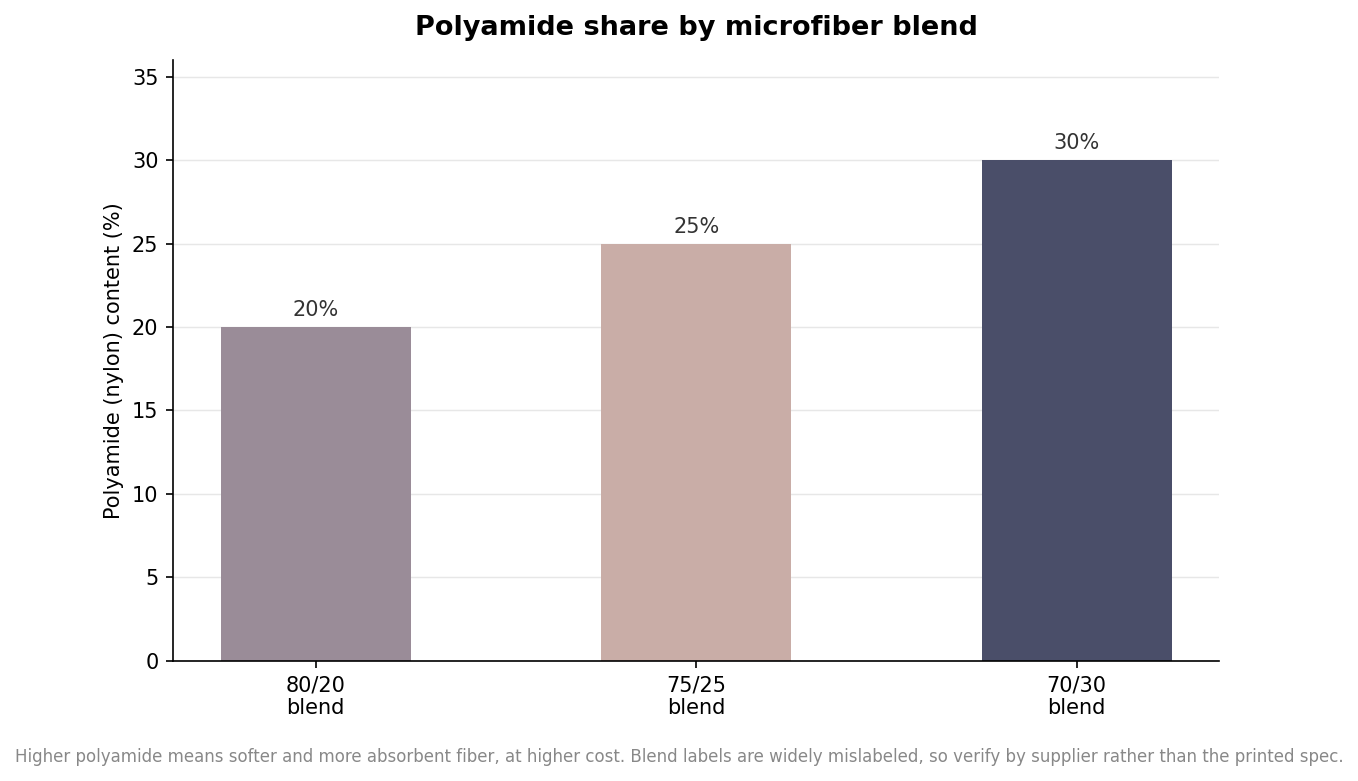
Two cloths at the same GSM can perform very differently because of their fiber blend. Microfiber is a polyester and polyamide mix, and the ratio, printed as 80/20, 75/25, or 70/30, tells you the polyamide share. Polyester does the scrubbing; polyamide brings softness and absorbency, so a 70/30 cloth is softer and thirstier than an 80/20 at the same weight, and it costs more because polyamide is the pricier fiber. The catch is that these labels are widely unreliable. Independent testing has found cloths marked 80/20 that were effectively all polyester, and the same factory output relabeled from 80/20 to 70/30 downstream. The practical takeaway is to judge by a physical sample and a consistent supplier rather than the printed spec: a genuine higher-polyamide cloth grabs slightly at dry skin and sheds no lint, while a mislabeled one feels slick and lifeless. When you match weight and weave to the job and then verify blend by hand, you get a cloth that does what the order sheet promised.